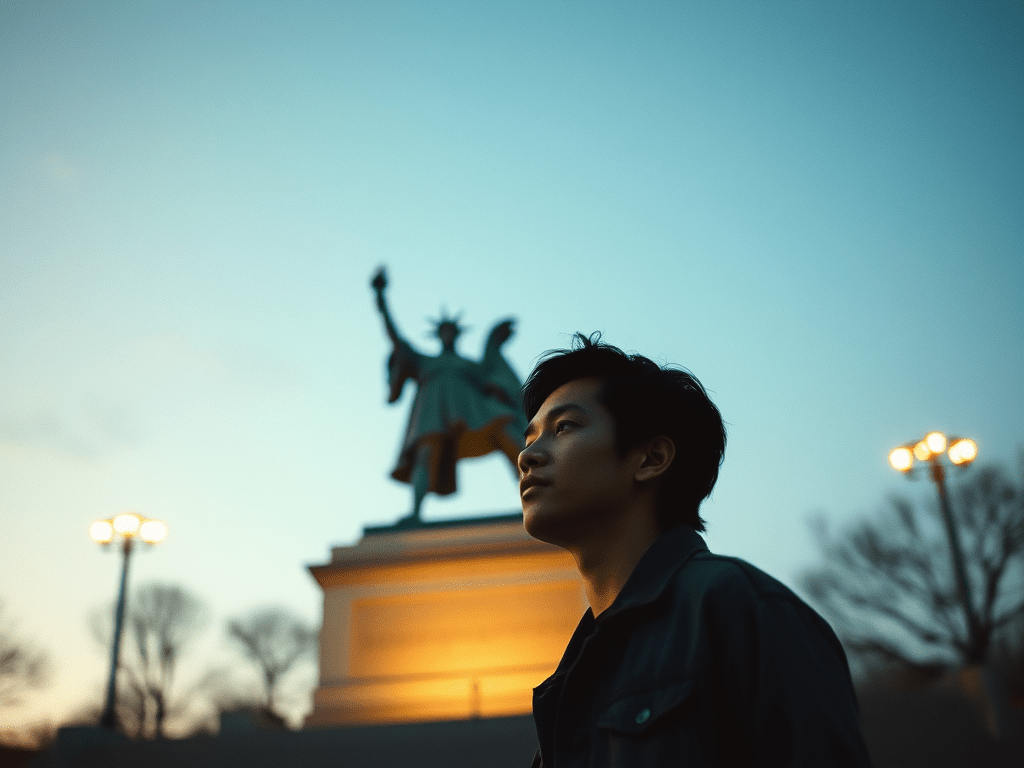
Who can tell me what I can read? what I may look at? what I should think about? That is the question we must ask ourselves in the light of recent events. It is attractive to entertain the notion of safety in our lives at the detriment of a few freedoms that most of us don’t exercise anyway but that safety comes at a high price if we consider how hard the generations that came before us worked to achieve the rights we may now abandon. Is this not the goal of terror, to terrorize a populous into calling upon their own state to restrict freedom for the sake of safety? If so then terrorism wins. I do wish to be protected, to have policemen on the streets armed if necessary, for my children to grow up in a free country with all the liberties I enjoyed as a youngster; what I do not wish for is to be limited in my expression.
The massacre of 12 cartoonists (January 2015, Paris) working for a left wing newspaper with a readership numbering only in the thousands has now galvanized public opinion against these acts of terror perpetrated by religious fundamentalists but are we yet to see the real fallout? I, as I suppose you do, sympathize with the victims of terrorism all over the world and I would not seek to take away the legitimacy of their voice in these difficult times but I would however warn strongly against creating societal rules that curb freedom of expression and bring about prior restraint. In our western society there is an underlying thematic thread of understanding that for freedom to flourish a person must bear the consequences (fair consequences) of their outputs, if a news journalist commits to print a piece that is fallacious then there will be a punishment by way of fines or job loss. This system has and continues to ensure that Checks and Balances are in place to prevent the accusation of wrongdoing from being the only component necessary for punishment, innocent until proven guilty is the common phrase.The burden of proof being on the prosecutor, the accuser or the mediator.
I think that the most important thing to consider is that the terrorist is not a generic entity. In a country where there is no tangible means of replacing the ruling representatives by way of ballot we may look upon those individuals engaged in armed conflict with their rulers as freedom fighters legitimized by necessity, in the west we may not be free in the sense that we can do anything we like but we have reasoned a solution to injustice in the form of our judicial system; there is just no way to excuse armed struggle in a democracy that can replace leaders when they are found wanting.
If we propose a censor we must decide on who that censor will be. As a thought experiment decide for yourself upon 3 persons you would nominate to decide what you can read. I have read the old testament, the koran, the new testament and many other religious texts and I have found none of them fit to be on the same bookshelf as George Orwell’s 1984, Aldus Huxley’s Brave New World or Thomas Paine’s Age of Reason. Most of the greatest writers in history were rebelling in some way against the doctrines and manifestos of the powerful, Rene Descartes opened the door to doubting the existence of god in his meditations concerning human knowledge, Hume all but claimed himself an atheist in his work and in recent times Richard Dawkins has been one of the most prolific deniers of deity the world has ever seen, these writers have all had attempts of censorship thrown at them. If we allow the government to tell us what we can and cannot absorb in respect to knowledge and art then we become subjugated by a power that we cannot have granted in full awareness to them; the paternalism of a democratic government is a right granted by mandate of the general populous fundamentally based on the disclosure of knowledge, this disclosure of knowledge being paramount to the decision to grant said right. without informed knowledge consent is illegitimate therefore it is paradoxical to think that a government can give such rights to itself since it (government) should be merely a representation of the will of the masses.
We have already seen prior restraint in action. The Leveson inquiry was a farcical affair that when scrutinized revealed an underlying motivation of the powerful. Let’s look at the way it worked out..
Firstly…..
- Investigators working on behalf of the newspapers illegally tapped the mobile phones of celebrities and victims.
- They were caught and prosecuted under existing privacy laws.
- At this point we can say that existing laws worked, police were proved capable and no further intervention was required.
But…..
- Government launches inquiry into phone tapping (Lord Leveson).
- Government brings forth new legislation that can be used by (a supposedly) independent external agency to restrain editorials before publishing.
So…..
- In this way we can see that the power and responsibility of the editor is removed.
- Government influences the information that can be disseminated to the populous through all forms of media.
- The people are now ill informed and ill equipped to vote.
Is this in any way satisfying?
Paul Simon Wilson

 pinkfloydpsw's Blog
Leave a comment