This is a bold claim, it is hard to imagine that all are actors in a political drama all of the time or consciously so. We can look at the importance of defining politics – how much influence it has to everyday life, analyse surveys and debate on influence and empowerment, discuss interaction with and membership of a state. I will be expressing my own opinions as a citizen of a state with an interest in its affairs.
Power
What is politics? Simply put it is the means by which we legitimise the regulation of human interaction based on the fundament that we are all somewhat engaged in the objective of building the good society, and that we recognise that that is to our benefit. What is suggested is that debate and actions are political if and when they are supported by power; the more influential the political actor/group is the more likely their will is to become reality, an old idea pointed out in the works of commentators such as Nietzsche, Marx and in recent times Chomsky. This power can come from the manipulation of the masses, to adhere to a certain ideal such as an action that appears to serve national interests, or the flexing of financial muscles from institutions involved in trade and employment. It may come from social media – allowing networks of individuals to find commonality or it may simply be the power of the better argument. What is clear though is that individuals will hold political opinions even if they are not involved actively in the creation of the norm. In agreement with the opening statement is the view that if politics is those mechanisms which create and maintain a society then it is hard to think of an action that, when dissected fully, falls outside of its remit.
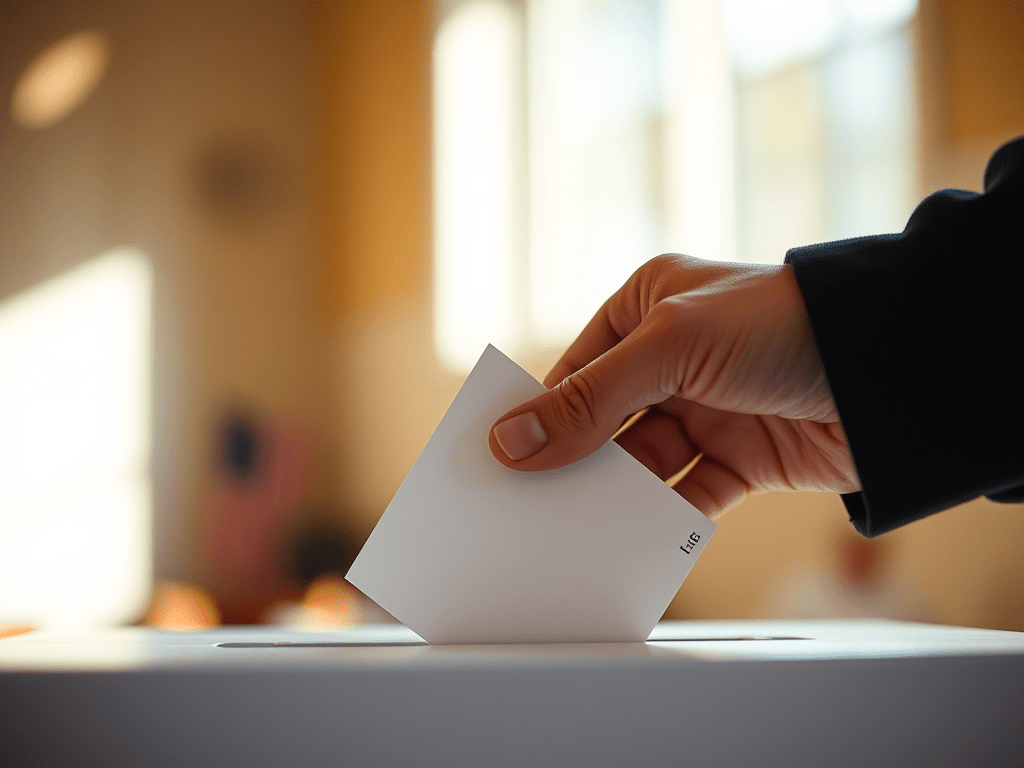
The peoples of a nation have the ability to interact with the politics of a state if they choose to do so by voting, supporting or opposing policy, formal or casual debate, voting with their spending power, social media or getting involved directly by standing for office. so the opening statement holds true in so far as the individual or group has an ability to decide what action to take. Where there is no ability to choose an option or action such as whether to be employed or not, pay taxes or live by the laws of society our lives may only be described as loosely politically defined as subjects of politics.
Peoples and Places
A qualitative endeavour of gauging public opinion in Manchester as to how those surveyed define politics. The speakers appeared initially negative in their opinions, particularly on the exercising of power; certainly the general consensus in the few conversations is that the parts of their lives that are important are affected by the political machine. The participants particularly highlight the nanny nature of government in that a lot of decisions to do with consumables, health, immigration and education have been made for them and they are conflicted in whether to trust the outcomes or even the motivations of those involved in the political process. This survey could have been done in any major UK city. This is where the will of the family or the individual clashes with the will of the state. It is interesting to note that in some circumstances less rigid approaches are used to create acceptance of political ideas, for example the legislation on smoking bans is widely and peacefully accepted so it is introduced as an edict whereas the government’s position on vaccination is presented as more of a strong suggestion (with added support from what appears to be the non political agency of the NHS).
On the issue of immigrants/refugees the conflict that arises is between the right action as persons or as a state protecting itself from potential burdens on resources, the culture of a country being a compromise between tradition and added diversity, so political conversations (Huysmans, 2005) are important in highlighting that the UK government must attempt to strike balance between the benefits and burdens of admitting migrant peoples while also maintaining national identity and managing the fears and expectations of current citizens. Turning what may be the result of a tragedy in a foreign land into a Cost-Benefit-Analysis exercise will not however appease charitable bodies or agencies campaigning on behalf of refugees, but the cost to the individual financially or culturally is often the bargaining chip used in parliament to assure support/opposition; otherwise the matter would be simpler, for who would care about immigrants if they had no such impact?
National Identity
National Identity allows not only for the subjects of a nation to be protected by its structures to a greater extent than immigrants or transient peoples would be but also allows for input in, or resistance to, the everyday affairs of the state, the fact a law is ratified in parliament that effects an immigrants ability to decide what their benefit allocation is to be spent on is example enough of this division (Huysmans, 2005) if one imagines the public uproar this policy could cause if applied to all benefit claimants. The mechanisms of creating and maintaining a national identity are more complex than simply supporting policies in that the relationship between those who create and those who contribute is mostly paternalistic; rules and procedures disseminated from the top of society on behalf of the people but in few cases driven by social forces.
Even in western democracies there will be no referendum on all matters and the state is assumed to represent the best interests of the majority of its subjects in much the same way as other nation states exercise their powers; even though they have differing political systems and procedures. In western democracies the governance is by way of agreement between the people and the rulers in that they will identify with and act upon the will of the masses, the maintenance of this relationship is at the hub of forging bonds that encourage people to feel that they belong to a society of individuals with common fears, opportunities and goals.
Conclusion
In agreement with the statement politics is a part of our everyday lives and whether we realise it or not we are politically motivated individuals with opinions and a part to play in the building of the acceptable norm. We have opportunities to give voice to our views, as consumers we opt in or out of the organic or anti-GM movements and there are no lawful barriers to our own path into politics. The issue is empowerment or lack thereof and the actors in the political drama are those that shape society and those that are subjects of it but all play a role whether consciously or not. Societal norms may not always be political in nature but they are the result of a society solving its problems by political means.
Paul Simon Wilson
Ref:
Jef Huysmans, (2005). What is Politics? Milton Keynes: The Open University.
Jef Huysmans (2005). Debating Politics. [ONLINE] Available at: https://learn2.open.ac.uk/mod/oucontent/view.php?id=422429&extra=transcript_idm7283184
Huysmans J, (2005). ‘Who Belongs to a Political Community?’ In: What is Politics? 2005: Milton Keynes pp.49.

 pinkfloydpsw's Blog
Leave a comment