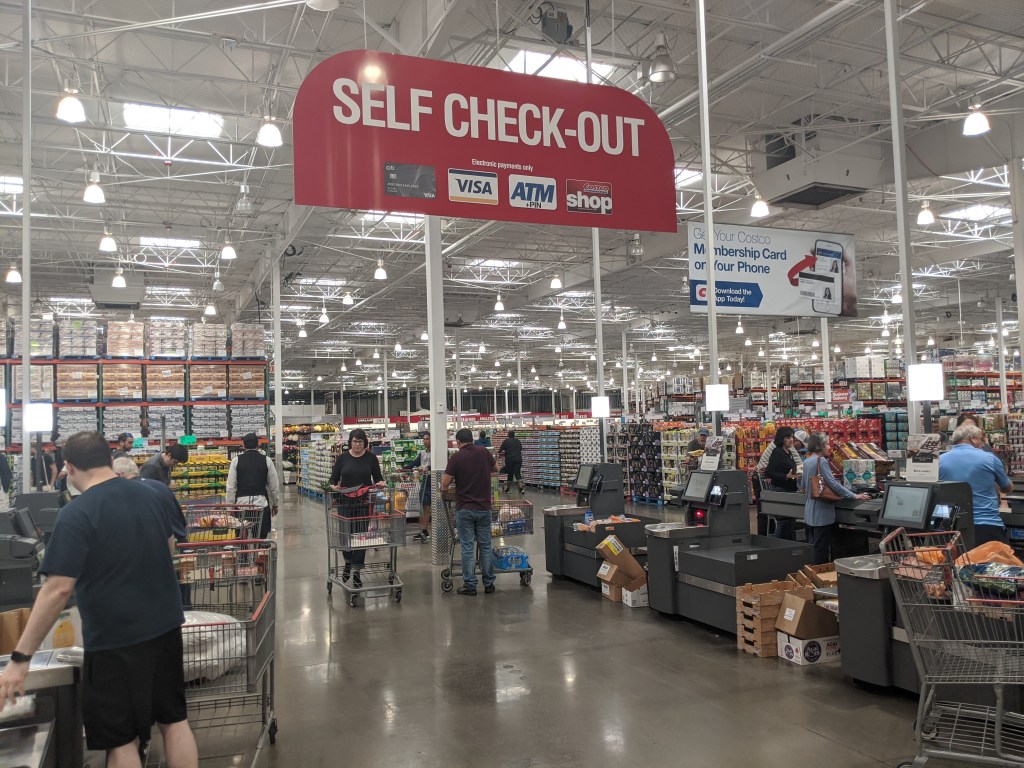
The street has one person working on it, it’s the same story that plays out on every long street in the City of Eastmere. The year is 2035 and the shoppers, as they always do, have descended upon the high streets on a Saturday morning in early September, the weather is fine and the boutiques are prepared to yet again sell their shoes and dresses to those folks that can still afford to buy them to add to the collections in the bottom of the cupboard or the walk in wardrobe if they happen to be very well propertied. I suppose they might even wear them some day if the right friend gets wed or dies, who knows, but that’s never been the point of buying them.
Money has to be spent on something, and after the extension with outdoor eating area is built, the weeks in Dubai and Singapore are booked, the second weekend car has been changed to that 35 plate convertible, the school is paid up for the next few years, and the stock portfolio and investments have been made in the NHS and Policing Corporations, there is often still too much surplus for some of these folks. Let’s face it buying things at the weekend just feels good, it used to feel good to us! As an externality it will provide some very good stock in a few years time to give to charity when the space is needed for yet more new items, and they can feel very good about doing it at the time because there’s really nothing better than doing nothing really and getting a compensatory reward for no more grand an act than deciding you were never going to wear those shoes or that dress, as well saving yourself from feeling rather stupid about putting them in landfill having never been molested by a foot or your grand backside. So it’s a win for the money people, a win for capitalist consumption, and a win for the economy the way we measure it (which is by the accelerating velocity how much shit gets bought, and by how much fatter the bank balance is of the wealthy compared to last quarter)…it’s not a win for sanity however…
There’s not much here now since everything moved online, thankfully you can’t yet get a haircut or your nails done by the cloud, but you can book it and feed back, tag yourself in their ToxTicks social media presence while there, then rate them to maybe win a prize high end facial. The overnight bums and vagrants that littered the doorways have been moved on for the day by the time the Electric and Hydrogen Mercedes and Range Rovers park up in the city, they’ll be thankful that they’ve been lucky with the overnight weather so far this year. Many remember the time when these folks used to work in the shops, that was of course before the days of self-service checkouts, computerized stock ordering, and mechanised shelving. The woman in the doorway of Bollend Garmot health food store, a prime spot because of its very decadent heated footplate entrance, ironically worked in that shop and lived in an apartment on the outskirts not thirty minutes walk from there. She had an income and was an economic actor at one time, she shopped in the city for essentials and sometimes even had a bit of disposable cash herself, even during Austerity, the first Pandemic, Austerity-2, and the following Biotic crisis’s there was a chance at a night out or a MoviePix evening with food arriving at the door from various vendors, delivered by a guy on a moped, before the autonomous drones took that role. She didn’t ever get the chance to put real hay in the barn though, that’s maybe why she finds herself in these circumstances now. Her mistake was to be on the wrong side of the street when the NHS stock went on sale, she was with the protesters and not in the queue to buy the shares.
I remember those times myself, and I distinctly remember being often rude in the early 2020s with the employees that made me aware, as if I was some simpleton that hadn’t already noticed, that there were self-checkouts available that I could use, or that I could use a hand scanner as I browsed to either check prices or tot-up as I went, thus enabling me to have a faster shopping experience if I was willing to do the labour as well as the purchasing. I had chosen to take a stand and I appeared to be one of the few that did, “I don’t fucking work here!” was what I wanted to scream at them in the hope that they fed that back in their meetings (they likely wouldn’t though anyways, nobody likes a negative employee), because “no thank you” seemed a little too safe and timid and passive and accepting. I settle on “no” as being my protest, it’s something at least, we are British not French you know. This retort often left the people around me thinking I was the ignorant one in this situation, and it left the person offering feeling like I’d been a little rude. I didn’t care, I knew the person making the offer was programmed by their corporate masters to think that, for one thing they were lucky for now to survive the cull of employees that preceded this technological revolution, and for another they had no choice and it was not their doing that things were progressing this way. I still didn’t care though as I had no other way to protest and I couldn’t get the thing I was buying that day in that city anywhere else that didn’t also have a machine I had to work myself.
Capitalism has always had a way of framing her condition as her own making, because of her own choices of course, so her own problem to solve, nothing for us shoppers to need worry about really. This is the compensation that the corporate bods always needed, so it was easy to walk past the beggars and the down-and-outs. The automated satellite guided truck backs into the automatic door, the robots slide out the prepacked shelves of goods, shoppers shop and the RFID machine scans their in-body chip as they exit through the reader doors, the bank computer checks the transaction in the cloud (all banks are in the cloud now), the fiat transaction moves form one account to another, and at the end of the day the automatic door shuts. If it doesn’t then the street supervisor will use his handheld device to summon the maintenance robot. As I watch all this I often wonder for how long will this person exist before they are replaced too, they seem to be the only one working around here now? Of course money isn’t money anymore anyways, it’s a token and it’s programmable too, that was done in the 20s. The tokens the few actual workers get can be spent on rent and food, commuting, streaming services, cheap musical instruments, and a small amount of booze and drugs to keep them just stupefied enough, but even if they had the credit for a high end car they’d have to apply to get their rating increased and someone would want to know how. This measure was introduced by the American banks first but came here quite soon after, the idea being to stop the black market from gaining strength when the economy stopped being able to provide goods. The result being that through controlling consumerism as if a parent dishing out pocket money at the seaside the government could decide before the fact exactly what people could and couldn’t buy.
Brexit had been a disaster in the early 20s and the sanctions on the nuclear wasteland that was then Russia backfired badly causing mass impoverishment. We had had to buy our gas by proxy so the great bear still sold just as much of it to other countries as before and they then sold it on to us knowing that we would pay whatever they wanted while we needed it. To prevent revolution the government of the day borrowed more and more to subsidise the energy companies, and then those greedy bastards put their prices through the roof, bankrupted the country and in time became the new corporate fascist order behind the scenes, wresting power away from the banks and newspaper owners in a financial coup. They won’t be hiking gas prices up again anytime soon , not since we (I say we, I mean the then new regime) nuked them, though then their resources are lost to us for at least 500000 years, it’s no matter now that we have robots digging coal for the factories in Africa that make all our shit.
I’d been in Feet in 2022, the famous drug store, and they had no human operated tills anymore, and not even a supervisor of the checkout area since they had assumed we had all learned by now how to use the machinery. So I left and didn’t get the foot cream I wanted, happy that I had not participated, but with problematically dry feet I’d have to solve another way, I got it somewhere else that had a girl on the till (back when we could also just about still refer to females as females or girls, back before the the gender assignment revolution). I worked in technology as a computer guy and I even liked what it could do at times, but my hope at that time was that there would be a backlash against the changes in employment technology would bring. That the people would recognise some innovations, particularly this one, as a step too far. After all I had studied Econ at degree level and maybe assumed wrongly that what I had read, being already obvious to me before I read it, would be obvious to all persons who are financial actors in an economy. Namely that people need a disposable income so they can buy things or capitalism moves into crisis.
I was dead wrong, individuals are intelligent, but crowds and movements are a mass of stupidity and often focussed on the wrong problem, or in some cases deliberately blinded by sports and circuses while the good city burns. I’m not old but I’m old enough to have experienced manned (there’s an old term) petrol pumps, a meter man calling to the door, my groceries being bagged by an assistant to the till operator. This was once the norm, then came the creeping progress of Shadow Work, and quite problematically for me it was welcomed by most people that shopped. “This is great, so fast and convenient” they would say. Even people who were against it initially would be okay if it were a small purchase and there was a woman with enough in her basket to feed an army of brats in front of them in the queue. They’d nip past and use the self service till, “just this time, because I’m only getting a bottle of water and a snack bar on my 20 Minute Lunch break”, the time saved being precious of course. It’s this hurried nature of life that now permeates 2035, every picosecond of every waking minute not used for some purpose of progress or to create a digital content, usually defined by the trend of the time, is almost a criminal act. How are you supposed to achieve what society says you should if you are daydreaming in a queue?
I don’t think he started it, but I think former presidential hopeful Schwarzenegger echoed it when he said about wasting two hours of your day sleeping when you should only sleep at maximum six, “just sleep faster”. It’s this attitude that I still find problematic long after he was uploaded into an immortal computer simulation machine, somewhere in Nevada I think, to live out forever pumping iron and shooting bad guys. It was this way of thinking that seemed to me to be a form of self harm no less dangerous than cutting or starving or just loathing the fact that you were not perfect because other people were projecting their perfect lives on social media; we are all walking comparison engines after all, and the comparison was often bleak.
How often is it that there is to be uncovered, if we dig down far enough, a tactic in all of this? The rich are not quite as stupid as they once appeared or would have you believe (I remember Michael Parenti warned us of that but we ignored him). We all remember the the ex PM and fool player Johnson, now famous for trying to stay in office (his second time) beyond the time he was supposed to leave, screaming “the country needs me” and “I have a mandate” as he was bundled into a white van outside No10. We once assumed that this guy was simply an incompetent in a party of other incompetent and out of touch toffs, but a cuddly one, that turned out to be our biggest mistake. If we were to take a different attitude to what he was doing during one disaster or the next, and maybe assume that whatever happened was deliberate and well thought out, we might see him as a screaming success story, just not one that was focussed on the outcomes it pretended to be. Let’s say Johnson, before his descent into insanity, set out with a goal to shift massive amounts of wealth into the hands of his own social group, his family, his friends and his sponsors, and to do so he had to do certain deals with members of his party and the media so that they could facilitate his strategy. When looked at through this lens it looks like nail-hit-flush-on-head doesn’t it?
I suspected as much personally at the time, but the great hope that Starmer would launch investigations into goings on when he finally got his opportunity faded like footprints in sand as he continued the theft, and so did the Tory that followed him, and the political hologram that followed that guy I can’t remember the name of, and so did the system that replaced the sham Democracy in 2031 when the corporate cabal decided they no longer needed a pretend government to do their bidding and so replaced it also with a technology they quite paradoxically called Demos. In case you don’t remember it, in simple terms the Tory party took out a series of massive loans on behalf of the people, to be paid back through taxes, and gave the money to those they had relationships with so that they could then hike up the prices of goods by being brokers. Goods that the government then in-law forced the mandatory purchase and use of for long periods starting in 2020 and still continuing today, goods that are often defective. This was the third time that I know of in history where that happened, the first being the mandatory purchase of slaves from their owners in a previous century, but the first of the time period in question being Austerity from 2010 by a different PM, but of the same party. Simply explained, Austerity is where you pay the same amount of taxes to the government as you have always done, maybe more even, but you get far far less than you have been used to getting back for them, so a break of the social contract (if people still read political and social theory and know what that was). The Cameron government shut down just about everything, got rid of every facet of society that acted for the social good, removed the right to legal representation, sold off chunks of UK infrastructure, and gave the bankers back the money they lost gambling at the poker table by creating a massive public financial debt. I thought of Austerity as taking out a personal loan to pay the debts of a degenerate gambler that you didn’t even know, just so that maybe they wouldn’t kill you and steal your car if you met them. And nobody ever found out who these swine lost the money to, probably each other…
The early part of the 20s was our last missed opportunity, at that time protest hadn’t yet been banned, neither had striking, nor had online movements and groups. For those of you too young, striking was the withdrawing of ones labour for the purpose of forcing the masters of that industry to the negotiating table when the latest changes to working conditions or pay they had proposed were thought by those that would be affected by them to be too much. This was often if not always lead by unions, they were collectives that represented the workforce in those negotiations so as to have some power to maybe modify the masters plans downward from being akin to indentured slavery and more like just a soft kick in the balls for your trouble. Specialisation, as mandated by Adam Smith, proved a bit of a sticking point for the corporations. Specialists are not easily replaced so they continued to strike. One way to mitigate this seemed to be to get rid of specialisation, “can all till trained staff come to the tills” we might remember coming over the tannoy, indicating the multiple role of operators and stackers. It was technological replacement of people with machines that ruined it all though, the middle class labour of the previous history of capitalism was specialist and was gone, and left were only machine operators and men in suits.
Before the ban on striking, which was said to be necessary (aren’t they always sold that way?), the right to withdraw labour had been a part of western freedom, but it went the way of the dodo just like the NHS did a few years after. That was necessary too and we were told we’d have it better under the new insurance system, a utopia, the best health care in the world for those that worked and a charity system for those that didn’t, the workers would be benevolent of course! We didn’t take that chance, a guy called Corbyn ruined it all by not winning in 2017 in the face of every mechanism of the corporate machine. The media hated him on behalf of their owners, business owners hated him on behalf of their banks, banks hated him on behalf of their underwriters, and people became echo chambers of the corporate owned press often repeating untrue statements about the dread that would follow if he were elected. If you’re going to shoot you better not fucking miss! He had the internet and most of the social media youth on his side yes, but that was before they were controlled by the corporations, the press was still strong then though, and he failed miserably to beat back the constant accusation that he was the devil, responsible for all the evil in the UK. I almost ended up believing it myself at the time..
It’s 2035, early September now. My doorway (it’s not mine really, I got here first and I’ll share if I have to) is warm enough, my cardboard is dry, and I have a few black market tokens in my cup so I’ll likely be okay this evening at least. I may move up to the free city sometime soon, I’ve been promising myself that for a while now (think escape from New York, that’s a film from the 80s), where I may or may not survive for a while. I still “don’t fucking work here“ now… but then nobody does anymore… and who needs a job anyways when you don’t have a mortgage lol? But this is not a story of despair, the now echoes the past in that the only time in history that the tables were turned on the rich was during the 20th century, and I choose to believe that if it happened once it can happen again.
Paul S Wilson

 pinkfloydpsw's Blog
Leave a comment