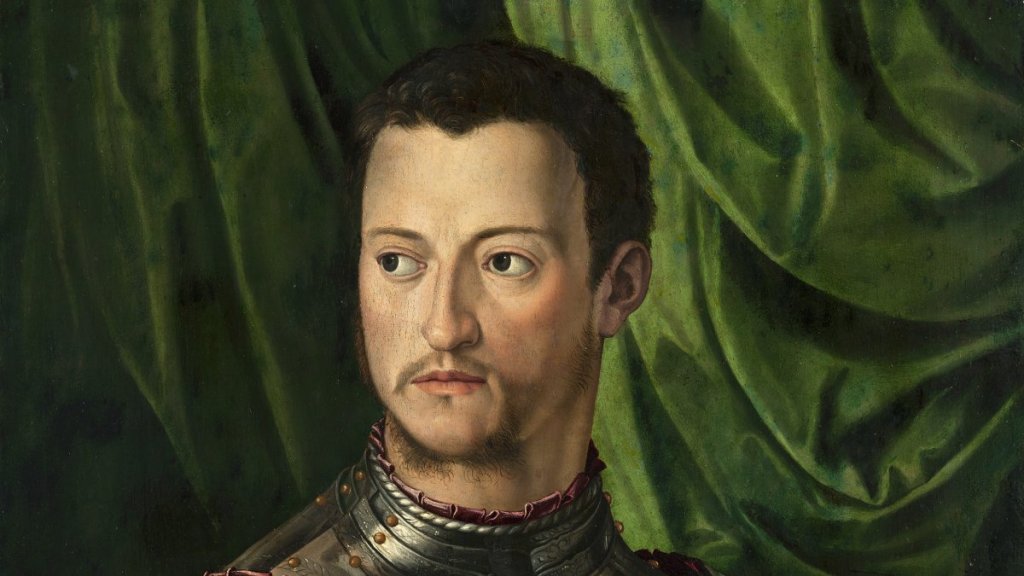
I go to old places, I’m bit of a history nut and luckily so is my fiance. What we notice, what we cannot fail to notice frankly, is that in all the paintings the people look authentically from their time period in history. The men, mostly rich men since somebody painted their picture, are bloated and particularly ugly, with awful skin and hideous hair. The women, mostly well to do also since somebody is painting their picture, are different in different time periods and based on the fashions of the artists of the day (maybe how the artist was instructed to paint the ladies) and the defined dignity they are required to have based on the expectations of the upper classes. In British art in the last few centuries, as in Spanish and Italian as far as my limited experience tells me, the perfect woman is a little plump, this differs from ancient depictions of women in Greek and Italian sculpture where beauty is muscular yet delicate for women as well as men. Often you go to a National Trust property and walk past an endless array of portraits of generations of the same the family that owned the place, what can be noticed is that often all the female faces look like they could be the same person, an indistinct typical face, not beautiful, but not of anyone in particular, very likely not anything like the subject I suspect. I had a girlfriend for a while who had this face, it was almost as though she was a manikin, and I don’t mean that in a nasty way, she was lovely and she was a athletic sort, sexy of body for sure, but there was no way to describe her facial features because there was nothing other than listing that she did in fact possess a Nose, Mouth, Two Eyes, Two Ears, Cheeks, a Chin, a Forehead, some Skin, and her eyes were deep brown etc.
Now watch a period drama, they don’t capture it do they? It’s not believable, the actors look too Present-Day no matter what way their hair is styled or what clothes they have been dressed in. The females are the sexy ladies of today like Phoebe Dynevor (Bridgerton), or Charlotte Hope (The Spanish Princess), both rare modern beauties, for sure they hit the gym and eat their plant based diets, the ladies they portray would have been lucky to have a walking room in the house but nothing that would have made them sweat. The men are not fat enough and or bursting out of their tunics, they lack the rugged nature that the portraits capture when gruff men make-good or clergy spend their years damaging themselves with too much meat and cigars and port, they lack the angst of a life of Abrahamic stoicism, the sexual guilt that must come from knowing that you are the sort of aberration that beds their wife strictly missionary every few months yet creates scandals with the servants at every opportunity. I read Nietzsche’s Genealogy of Morals, he highlights the conflict between the pursuit of a Christian moral existence while also being the animal that all men are, his point being that to love unconditionally is to actually hate as if love was a form of hatred, to forgive is to put vengeance off for a sweeter reward in the afterlife where out enemies will suffer eternally for our pleasure, and to pretend that this conflict does not exist. Portrait artists often manage to capture all this regularly, that’s why you can be drawn to staring at some of these paintings, and truly feel you know from the look of the subject just what sort of a beast they were.
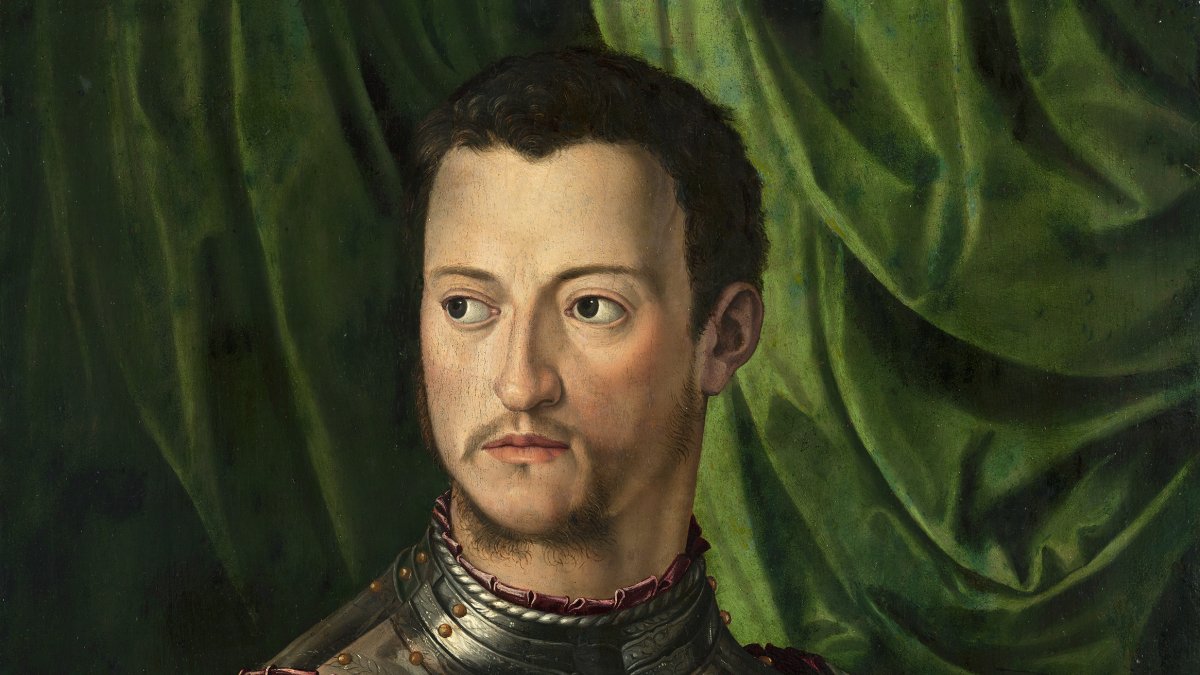
These people are ugly to us, they would be better looking of course if they lived in modernity with us and all our skin care products and central heating. Theo James and Crystal Clarke (Sandition) are far too sexy to be twenty somethings in a Jane Austin’s world, but The Shelby family from Peaky Blinders, along with much of that great show, are actually believable, now why is that? Well it’s simple, you either hire the right actors that look the right way, or you make the wrong actors actually look that way and act like their lives reflect the same experiences as those they attempt to portray. In Peaky we meet a lot of gruff characters from hard lives, the casting director pulled off a blinder when he selected who for what. Below is a picture of Cosimo Medici, portrayed in the TV series Medici by Richard Madden, sometimes he looked the part, other times he looked too modern and polished.
Other TV things capture the distant past well, BBC’s Rome series has you believing, with Vikings you buy in, and this is the important thing, Buying-In is the suspension of your rational mind in favour of a good story which has a purpose to entertain, or concerning history, to learn something.
What are we doing when we watch a period drama or visit a National Trust property exactly? I would say we are gaining, or at least trying to gain, an insight into the lives of those people that lived then and there. So what use is it when we use the wrong actors to portray these people, when we cast so badly that we entirely loose the period and only have the drama? If this is the case then why not enter a fantasy world instead, where it doesn’t matter about matching the character to the time. In Blade Runner we have a story, an imagined trajectory, in The 6th Day we have a technological future where we can clone and change people, in I Robot we see the problem of what to do when technology makes humanity obsolete. In all these films I mention we could have had any competent actor in the lead and it would have worked because our expectations of that world and that character are built as we go through the film, its content is all we can know about them and the world that made them can be anything. With a period drama we have the baggage of other period dramas, the smattering of historical knowledge we assume we know already, and the visits to places where we see the real people in photographic or portrait form to draw from, and in this way we are not matching an apple to an alien object, we are matching an apple to our idea of an apple.
Suspension of disbelief so as to illicit an emotional reaction from the viewer requires no leap if the characters occupy a fictional world created by the author, but even in history there are usable artifacts. In Game of Thrones there is almost no original place, George RR Martin borrows from both history and the history of myths, weaving stories together in what appears to be a fantasy world but where the Dothraki are really the Mongol empire, the Unsullied are really the Persian Immortals, the warriors from the great houses are the Knights of the middle ages, and the structure societies that are oft encountered are from all over written history. The show tackles themes we already know but not well, and that’s the key, it relies on our misjudgement and lack of clarity concerning history and myth to succeed as it does. It works primarily for the same reason that it’s prequel now doesn’t, a rich vein of interest is created by the inclusion of so many objects of myth and history and interspersed with a strong cast that carries it off because of their also diverse nature (House of the Dragon labours, it’s set unchanging, it’s cast too limited and too similar to each other).
How does a person sit through an animated story of a dog, a cat, or a rat even, and feel exactly the emotions that the writer wished to create in them, how is it that they will cry and laugh and have just the right desires for justice and success that are intended? We buy-in to the character, and we choose to believe in the narrative. For centuries people couldn’t read or write and they relied on pictorial interpretations and the spoken word just to know anything about anything. Story is so very important to us, and as Rick Roderick said “if it’s a good story you don’t ask, is that true?. That’s not important about a story, it is about a fact, but a good story has it’s own purpose”. So myth is the story of history that does not need to be true to still have value, it is not the knowledge of the world, although at times it becomes that, but it is the narrative that threads all things together like the narrative of your story, one that is likely not as true as you might like it to be. We have now the power to create our own narrative and put it out there into cyberspace, we call this social media, and by it’s very nature it is not fact because if people are given the ability to choose what goes in and what is left out then we all become Elton John and create our own Rocket Man.

 pinkfloydpsw's Blog
Leave a comment