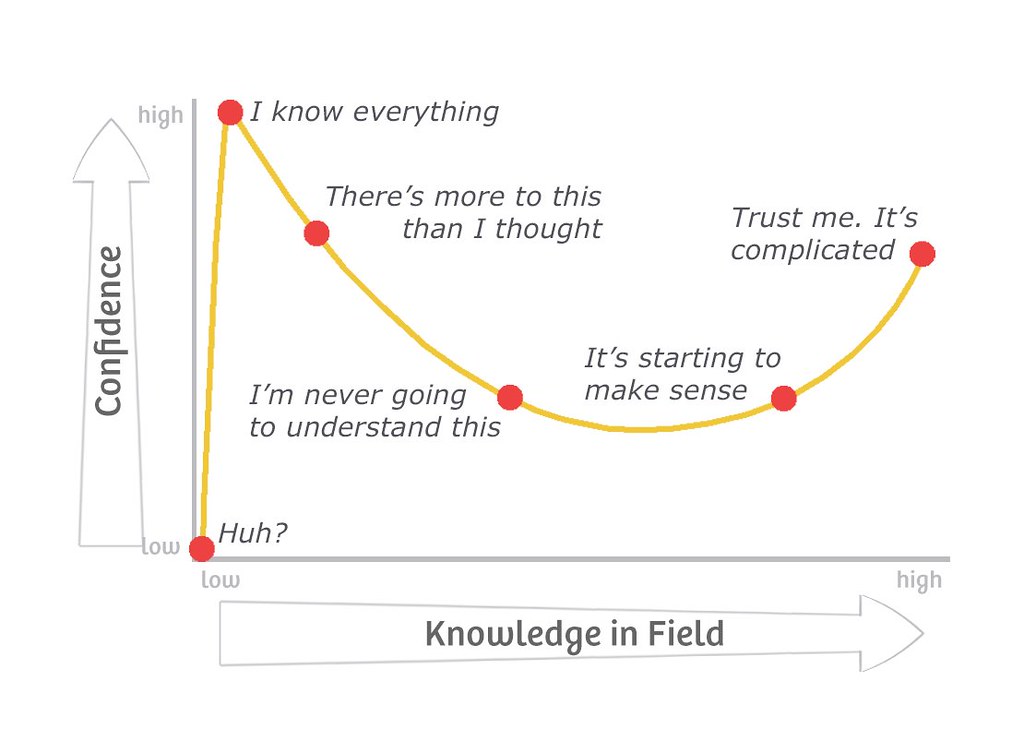
Often I have no idea what I am going to write, I just sit down and a rant falls out of my fingers. Let’s face it, that’s what my post are usually about, something that’s been weighing on my mind, something that irks me. Today though I watched an episode of Luther (UK Tv Drama, BBC) and I learned something that stuck with me. The scene is our hero being told by the ongoing, very likable, villain of the show that “studies show that positive self deception is both normal and useful, people fool themselves in three ways. They see themselves in an implausibly positive light, they imagine they have much more control than they do, and they imagine the future will be much better than the present trajectory indicates it will”.
I found this fascinating, as I often do with psychological study results (how boring am I?). I read Daniel Gilbert’s book Stumbling on Happiness a few years ago and it was full of insights into the human condition that were nothing more than mistakes between the evaluation of the future when performed now, the evaluation of the future when it actually happens, and the evaluation of the future when it becomes the past. It’s immense how often people are wrong when assessing their own possible perspectives of now, of then, and of what way they will feel about what’s maybe to come. Gilbert runs study after study that show that how you feel in the future is a lot different to how you feel you will feel in the future, if asked now to predict it. One example (from Gilbert) is what I will refer to as the mistake of variety and time; we take participants in a menu choice exercise and tell them they will have a meal every week from a menu of ten dishes for a period of ten weeks. When asked to choose all ten meals before the start of the dining experience the participants all choose varied choices, when asked to only chose as they go along the participants are much more likely to repeat previous meals if they enjoyed them. Now a person might say that this is because they enjoyed them, and that is a factor that can’t be ruled out, but… this is how people act normally, I always get the same thing every time from the Thai in my town, but I eat there only about once a month, so infrequently. If I was asked to pick what I would eat every month for the next year right now, I may make the mistake of thinking that I might get sick of the same meal, or that I could potentially be missing out by pre-limiting my choices. These considerations would not occur to me to make if I was not asked to pick in this way, and that’s the fascinating bit.
Another fascinating study produced the Dunning-Kruger Effect hypothesis, where over and over it is found that the most confident of persons are very often, far too often for comfort, the least competent. The overestimation of ability is so frequent it seems that it warrants a name (Dunning-Kruger). They, the researchers Dunning and Kruger, weren’t the first to notice the phenomenon though, an oft quoted man is Bertrand Russell who said “the problem with the world is that fools and fanatics are always so certain of themselves, and wiser people so full of doubts”. Does this mean that we are lead astray by confidence? Likely very often yes. Plato writes of Socrates that his most annoying feature, when faced with a supposed expert, was that he wanted to drill down into the reasons for their supposed expert status, challenge them to justify it by simply asking what it meant. Ask an artist to define beauty, a soldier to define courage or honour, a religious leader to define virtue, a lawyer to say what is moral etc, and you may find that they know the rules of the subject but not the why. In modernity we have solved this Socrates problem by creating Media Training, a sort of acceptable set of answers that sound just cleaver enough to satiate most intellects, but I doubt if Socrates would have given up easily.
Rules and structures seem to prevent falsehoods from challenge it would seem, I noticed this when studying philosophy at the OU, that when I strayed outside of the text they had provided I gained a lower mark and criticism, but since my first interest in philosophy came from a rogue named Rick Roderick, and my interest in studying the PPE was because I had become so interested in what could be called the Marginal Discourses of each subject, I didn’t feel like I should be thought of as wrong. I’m not pedantic but I am argumentative, and after reading so much I realised one very important thing – Every great work is a challenge to all that comes before it, it faces criticism, ridicule, and gains the innovator behind it a swathe of bad feeling. That’s what progress is, the tearing up of the canons and the dogma, “what is shaky, push it over” – Nietzsche.
Understanding human nature is the goal of those that study it, but the real purpose of that study is to find a way to change it. Changing human behaviour is lucrative, Gilbert is fascinating, his work is exciting and enlightening and I couldn’t get enough of it, but some folks liked it, along with a lot of other psychological research, a lot more than me. The people who use such things to make you vote a certain way, or buy a certain product, the think tanks that don’t just inform government but run it. Beware your hubris, beware your nature, it’s often being used against you. Go out into the woods without your devices, light a fire, and think for a while.

 pinkfloydpsw's Blog
Leave a comment