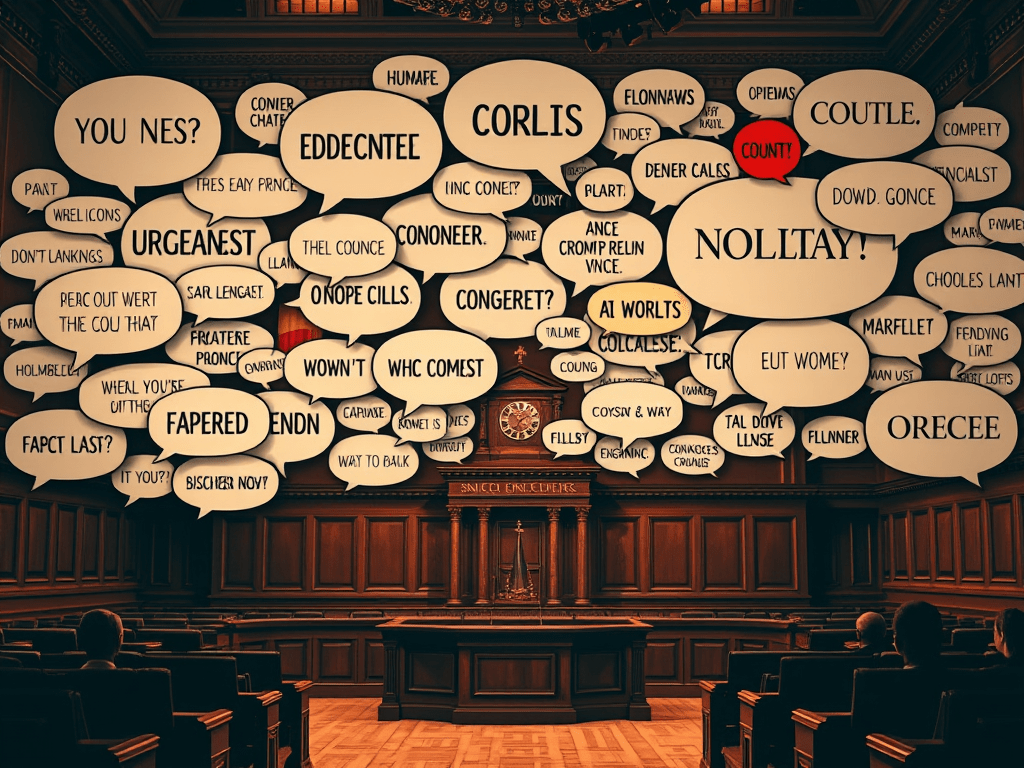
Today I return to a fascinating and oft misunderstood facet of human freedom, the argument against having our words restrained before we say them.
Wallace, not the guy with the dog, has been in the news and we’re all making judgements as usual on what he is accused of. At the point of writing this piece he is yet to be accused of any physical intervention between himself and any others, so he has not been accused of touching anyone in an inappropriate manner. What he has been accused of is making some people, specifically some females, feel uncomfortable with the things he has said to them. I wish to know how we are to judge these situations in a way that is usable over and over, i.e. an applicable rule that governs all interactions between people regardless of power and situation.
John Stuart Mill, he that wrote On Liberty, a great work of political and social philosophy that has been used to underpin western law and the justifiable expression of political authority to restrain citizens, could not get this one done. I’m just going to throw that in before I start, the reason being that saying that this subject may be tricky is a bit of an understatement.
Before us we have the problem that words are not actions, they do not harm the physical person, and they only harm the psychological person if that person is harmed by them. That looks like a circular argument because it is one. The circle is where the premise is justified by the outcome only if it is justified by the outcome, i.e. words hurt because someone was hurt, the same words would not hurt if nobody was hurt, it would be just as true to say that words do not hurt in the case that words didn’t. So it is not the word that hurt but the way the person they are said toward chooses to feel about them. Here lies the problem, we can say that if some people thought that bullets were not dangerous then they are definitely wrong because a bullet is dangerous regardless of if some people think it is or not. A bullet is demonstrably dangerous, a word is not.
I like the word C**t, I say it all the time, my partner likes to use it, my pals use it all the time. Some people are deeply offended by this word, they think it should not be said at all, they find it to be the most offensive of all words. We cannot agree, so we do not make laws on this word for the same reason that Mill did not write much on offense other than just enough to explain why he wished to dismiss the possibility that juridical rules could ever be made concerning it. If I were to call you a C**t and you took offense then you would have to prove that my intention was to imply that you were lesser, that I was being derogatory in my assertion. The problem is that this word has no rigid definition and is often used to convey humour or familiarity unlike if I accused you of being a liar, which is a word that has a fixed point of understanding to it that all can recognise. Mill did not tackle this, his was the simple assertion that a word cannot harm you in a physical sense, so your reaction is not something that can have power associated with it so as to restrain others in the things they may say.
To make a law in a democratic country, that law must have the condition of universality, meaning that in principle and in practical terms it must apply to all persons. Secondly it must be universally applicable to all victims of the crime it prohibits, meaning not specific to any gender, sexual group, or racial demographic. So in attempting to create a specified rule in the prohibiting of speech based interactions between people, the law must agree a line in the sand that acts as the point at which no person may go further. This is very difficult, I would say impossible, and the reason is again because it cannot in any way be measured or demonstrated. It is an ephemeral point that is dynamically moving when the people it is trying to apply to are shuffled or changed.
It is also dependent on other factors, the mood of the person when they absorb the words, the feelings they may have toward the person delivering them, the setting they are in and how that shapes their expectations, or the power dynamic between the speaker and the receiver; all of this matters. A person could take exactly the same teasing from one friend, and take it in jest, that they would feel was a slight from another. A person might accept a criticism from a well meaning friend better than they would accept the same from a boss or nagging partner. If you were to accuse me of being lazy I would agree with you, if you were to accuse my partner of being impatient she may agree with you, but would we defend ourselves from a stranger making the same assertions?
I’d like to tease that last point out if I can, defending ourselves. If we have to make a rule, a law, that applies only to protect what Wallace called a “Women of a certain age”, and we assume that he may be on to something since it is only women that have taken umbrage with him, and only ones of a certain age, then are we not in error since this is not universal? And what of making a restrictive rule against saying things, is that the sort of censorship, if applied to a very large group on behalf of a very small group, that Twain described as “Telling a man he cannot have a steak because a baby could not chew it”. And on the point of these women, should we also not be a little disappointed that they see themselves as so weak that we must make laws that restrict people from saying things to them?
I’ll grant you that there is the injection of power at play here, they are in a competition where they are subject to the judgement of the accused, and maybe that factor makes all the difference. I wonder would they have allowed this conversation in another setting? It is possible that Wallace is just a London green grocer and so cannot easily elevate his social nature to avoid a crassness that would be perfectly viable in his normal circumstances, or it may be that we might expect that he would have learned to interact with a wider range of persons by now. Or is the boot on the other foot, should the contestants have expected him to be a filthy witted London green grocer and all that comes with that cultural background? Often we appreciate the TV personality that exhibits the traits of their background. Is being tactless, or failing to read the reactions of your audience, worth all this, or are we calling a mere cultural and humour mismatch, combined with a possible over-sensitivity on the part of some folks, an actual crime?
What of Clarkson, Johnson, and other controversial TV stars, where is the fallout for the things they say, where is the umbrage for the journalists and pundits that have told suggestive non truths deliberately, where is the punishment for Sugar’s unfounded suggestions concerning certain political figures he does not personally favour, where is the ire for the Reform UK candidates and their oft spouted bile that invades the language of the citizenry making them state the falsehood that asylum seekers have acted illegally (it’s not illegal)? Is it only when a person from humble beginnings, like Wallace, steps in shit that we recognise that there’s shit on the shoe?
Paul S Wilson
Caveat: More may transpire, I am writing this post from the perspective of someone only looking at what he is currently accused of as of 03.12.24

 pinkfloydpsw's Blog
Leave a comment